Fighting Tips Every Zero Build Player Needs To Know

THE VAULT ESPORTS ACADEMY | FORTNITE ZERO BUILD
Fighting Tips Every Zero Build Player Needs To Know
Help us create more practical gaming guides, original visuals, and learning resources for players everywhere. Your support is optional and appreciated.
A friendly field guide to smarter cover, steadier aim, and better fight decisions
By Dr. Brian James | The Vault Esports Academy | Updated October 17, 2026

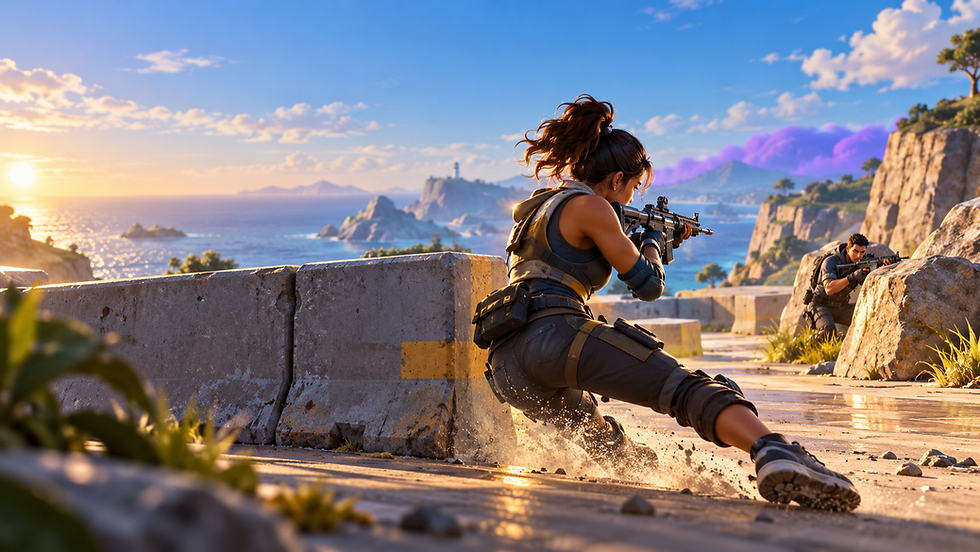
Choose the next safe angle before you leave cover.
In Fortnite Zero Build, fight outcomes often turn on who sees danger early, chooses a useful angle, and knows when a fight is worth finishing. Without player-built walls, the terrain, available items, and your decisions shape every exchange. Epic describes Zero Build around weapons, items, traversal, and quick reactions, and its launch guide urged players to move between cover. Those fundamentals give us a sturdy starting point—even as the map and item pool change.
Think of a fight like a small adventure: notice the clues, choose a route, take a careful shot, and be ready for the next surprise. These tips are designed to help newer and returning players build that calm rhythm.
Quick answer
To win more Zero Build fights, begin from cover, keep your crosshair ready, choose the right distance for your weapon, and act on damage only when the route is safe. If the situation turns against you, break line of sight, recover, and re-enter from a better angle. Choose fights that leave you room to act and recover.
The four-beat fight loop
When the screen gets busy, return to four simple questions: What do I see? Where is my protection? What is my best next action? What do I need to reset?

A simple loop keeps the fight readable when the action speeds up.
Begin with cover and an exit
Before you fire, identify the closest solid cover and the next place you can move if the opponent turns toward you. A rock, ridge, wall, or sturdy structure can interrupt incoming shots; soft concealment may hide your position, but it may not stop bullets. Do not assume every object protects you. Notice what blocks the line of fire and what only blocks the view.
Epic’s Zero Build guide highlights moving between cover. Make that practical: travel from one protected point to another instead of taking the shortest path across open ground. Before you start a duel, ask: “If I take damage now, where do I go?” If there is no good answer, shift position first.
Vault tip: keep one route for the fight and one route for leaving it. A safe retreat is part of a good opening plan.
Peek with a plan
Use cover to reveal only what you need. From the right side of an object, Fortnite’s over-the-shoulder camera often gives a useful view while keeping more of your character behind cover. This habit can help, while the object shape, camera angle, and opponent position still matter. If the view feels awkward, step back and find another edge instead of forcing a wide exposure.
Keep peeks short. Step out, take the shot you prepared for, and return to safety. If the opponent has already aimed at your position, change the edge, timing, or height of your next peek. Wait, move to another edge, or create a new angle.
Keep your crosshair where the story is going
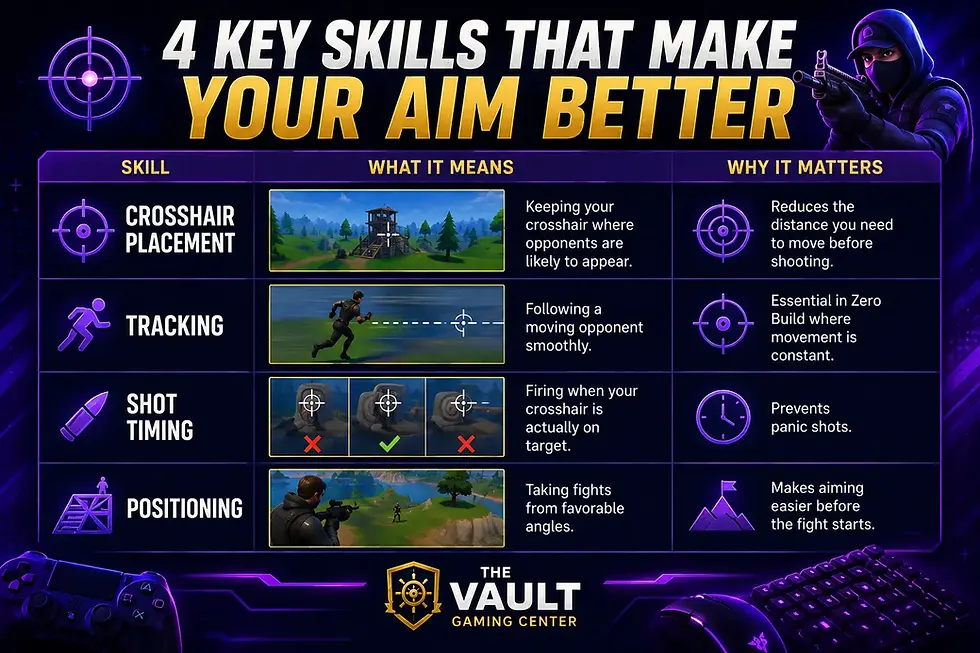
A ready crosshair saves the tiny delay between spotting an opponent and bringing your aim onto them. As you move, point toward the places an enemy could realistically appear: a doorway, ridge, window, or path between cover. Keep it around the height where the opponent is likely to be, then make a small correction when they appear.
Try this while rotating: follow the ground with your eyes, while keeping your aim around likely enemy height. Smooth, ready aim is easier to use than a dramatic flick after the opponent has already fired.
Match aiming style to the moment
Aiming down sights can help you make a more deliberate shot at range. In a close, fast-moving encounter, a wider view and free camera movement may help you track a target with a weapon that supports hip-fire. Neither choice is always right. Weapon behavior changes, and different guns reward different timing, so practice the weapons you actually carry.
A simple rule: use the view that helps you land the next clean shot while keeping awareness of the opponent. If your aim feels locked behind a moving target, reset your spacing or switch to a weapon that fits the distance. If the target is far and steady, take a moment to line up rather than spraying in a hurry.
5. Move to change the problem
Jumping, sliding, and strafing can make an opponent adjust their aim—but movement works best when it also takes you somewhere useful. Move behind cover, cross a small gap, change your angle, or create room to reload. Repeating the same jump or side-to-side pattern can become predictable, and frantic movement can spoil your own aim.
Fortnite’s movement options and Creative island settings can vary. Check your controls and test a drill before relying on a particular input in a match. Our companion guide, “Pro Movement in Fortnite Zero Build,” goes deeper on purposeful movement and cover transitions.
Press an advantage carefully
When you deal meaningful damage, the opponent may need to heal, relocate, or defend their position. That can be your moment to apply pressure—but only if you can do it without running into a second team or crossing open ground with no protection. Use a safe route, keep an escape in mind, and notice whether the opponent has mobility or nearby teammates.
If the opponent is distant, you are low on resources, or other players can see the route, chase only when the route and nearby sightlines support it. Keep the advantage by controlling space, watching their escape, or resetting behind cover. A patient follow-up can be stronger than a hurried sprint.
Know when to reset or leave
A reset gives you time to reload, recover when safe, check nearby angles, and decide whether to re-engage. If you are taking damage from more than one direction, have no clear route, or are badly out-positioned, break line of sight and leave if you can.
In duos or squads, call the reset clearly: “I’m moving to the ridge,” or “I need cover to heal.” A short, useful callout gives teammates a chance to help. If someone gets knocked, decide together whether a rescue is safe before the team rushes into the same danger.
Use weapons and items for their jobs
The best loadout is the one you understand and can use at the distances you expect. Learn how your current weapons behave, how quickly they recover between shots, and what movement or defensive items can help you reposition. The details change with updates, so avoid building your whole plan around last season’s favorite item.
Think in roles: one option for a close encounter, one for controlled damage at a distance, and a way to move or recover when the fight changes. Before a match, make sure you know which slot holds your quick response. That small bit of preparation can keep you from fumbling when the opponent is already in view.
Fast fight decisions

Choose the response that protects your next option, not the one that looks flashiest.
A 12-minute practice plan
Use a Creative target or combat island that allows the movement you want to train. Start slowly. The goal is to repeat clean choices, not race through the drills.
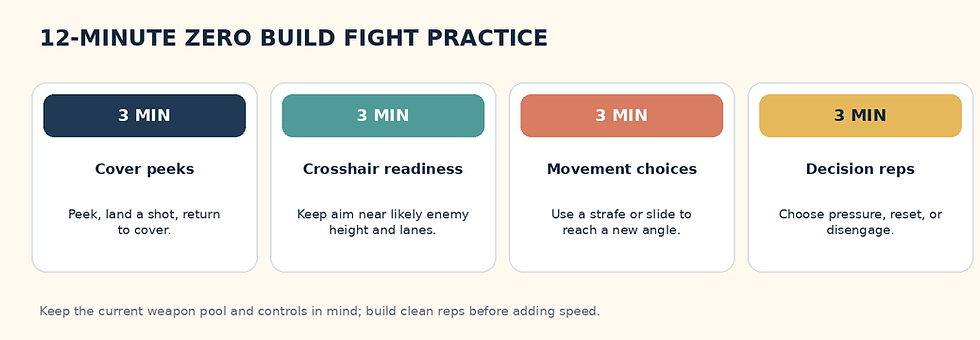
Practice one skill at a time, then combine them in a real match.
After a match, review one fight. Ask: Did I start near cover? Was my crosshair ready? Did I keep a route out? What would I change next time? Pick one answer to practice in your next game. Small improvements add up.
The takeaway
Zero Build fighting is a chain of good choices. Find protection, aim where the opponent may appear, make a short and useful move, then reset before the next challenge. When you deal damage, apply pressure only if the route supports it. When the fight goes sideways, give yourself permission to leave and try again from a better position.
Play curious, stay kind to yourself, and treat every match as another chance to learn the map. A smarter next move can change the whole adventure.
About the author
Dr. Brian James, AuD, CCC-A, owns The Vault Family Entertainment Center in Portsmouth, Ohio, and publishes The Vault Esports Academy. A former clinical instructor at the University of Utah, he creates practical guides that help players learn, compete, and connect through esports.
Frequently asked questions
What is the most important Zero Build fighting tip?
Start from a position with cover and a clear next move. Without player-built walls, your location and route can matter as much as your aim.
Should I always use the right-side peek?
It can be useful because of Fortnite’s over-the-shoulder camera, but the object, angle, and opponent matter. Use whichever safe edge gives you a clear view with less exposure.
Should I aim down sights in every fight?
No. ADS can help with deliberate shots at range. In close fights, a weapon’s hip-fire may make tracking easier. Practice the current weapon and choose the view that fits the distance.
When should I disengage?
Leave or reset when you are outnumbered, low on health, exposed to several angles, or have no safe way to continue. Move behind cover, recover if possible, and reassess.
How can I practice Zero Build combat?
Use a Creative island with target or combat practice. Spend a few minutes on cover peeks, ready crosshair placement, controlled movement, and deciding whether to press, reset, or leave.
Do these tips depend on the current Fortnite season?
The core habits—cover, awareness, aim readiness, and thoughtful decisions—are broadly useful. Specific weapons, items, controls, and movement settings can change, so check the current game and test your setup.